
in or o
Why does my lower back or hip hurt?
Lower back or hip pain is not always coming from a disc or muscle strain. In many Surrey patients, the source is the sacroiliac joint, or SI joint, where the spine meets the pelvis. When that joint becomes irritated, stiff, or unstable, it can create one-sided pain near the belt line, buttock, or outer hip.
Sacroiliac Joint Dysfunction FAQ – Surrey, BC
What is sacroiliac joint dysfunction?
Sacroiliac joint dysfunction occurs when the joint between the sacrum and pelvis becomes irritated, restricted, or unstable. This can lead to pain in the lower back, buttock, hip, or upper thigh and is often mistaken for sciatica or muscle strain.
Where is SI joint pain usually felt?
Most people feel SI joint pain just below the belt line, often more on one side. It may spread into the buttock, outer hip, groin, or upper thigh. Pain commonly worsens when standing up, climbing stairs, walking uphill, rolling in bed, or getting out of a car.
What causes sacroiliac joint pain?
SI joint pain can develop from prolonged sitting, repetitive lifting, sports, pregnancy or post-partum changes, falls, or compensation from poor hip and lower back mechanics. In Surrey patients, we frequently see this pattern in desk workers and active adults returning to training.
Is SI joint pain the same as sciatica?
No. SI joint pain usually stays around the lower back, buttock, hip, or upper thigh. Sciatica more often travels farther down the leg and may include tingling, burning, or numbness. A physical assessment helps determine the true source.
Can chiropractic care help SI joint dysfunction?
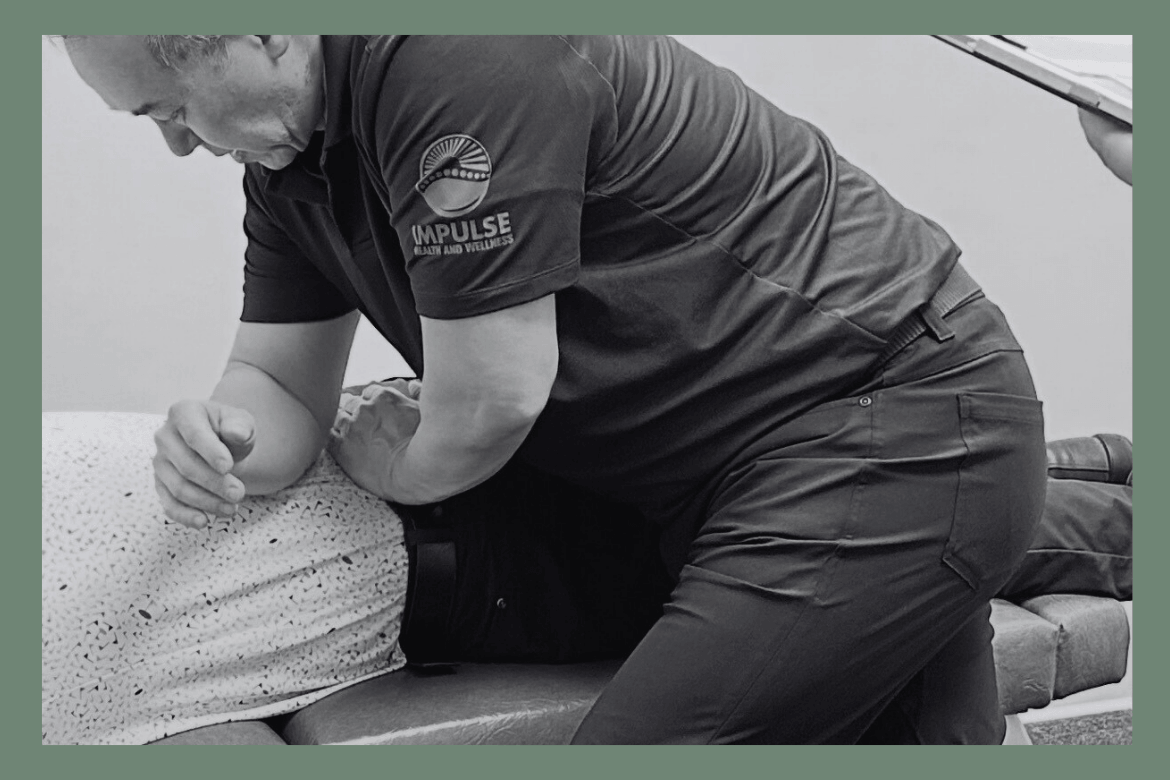
Yes. Chiropractic care may help improve joint mechanics, reduce surrounding muscle tension, and restore better movement patterns. Treatment can include specific adjustments, soft tissue work, mobility exercises, and guidance on posture and activity.
When should I seek care for SI joint pain?
You should consider an assessment if pain lasts longer than one to two weeks, keeps returning, interferes with sleep or walking, or feels sharp during movements like standing, rolling in bed, or getting into the car.
Do you treat SI joint pain in Surrey?
Yes. At Impulse Health & Wellness in Surrey, BC, we regularly assess and treat lower back, pelvic, and hip pain, including cases related to sacroiliac joint dysfunction and movement-related strain.
What does SI joint pain usually feel like?
Most people describe SI joint pain as a deep ache or sharp pinch near the dimples of the low back, often more to one side than the other. It can also refer into the buttock, outer hip, groin, or upper thigh. In clinic, common aggravating movements include:
- standing up after sitting
- walking uphill
- climbing stairs
- turning in bed
- putting more weight through one leg
- getting in and out of the car
That pattern matters. It gives us clues about whether the problem is coming from the SI joint, the lumbar spine, the hip, or a combination of all three.
Does This Sound Like Your Pain?
In our Surrey clinic, sacroiliac joint dysfunction often comes up when patients describe pain in very specific everyday movements, not just “general back pain.”
- Sharp pain getting out of the car
- One-sided pain near the belt line or into the buttock
- Discomfort walking uphill or climbing stairs
- Stiffness after long periods of sitting or commuting
- Pain that flares when getting back into the gym
- Lower back or hip pain that keeps returning on the same side
If that sounds familiar, the SI joint may be part of the problem. That said, similar symptoms can also come from the lumbar spine, hip, or surrounding soft tissues, which is why a proper assessment matters.
What causes sacroiliac joint dysfunction?
There is rarely just one cause. More often, it is a build-up of mechanical stress. Common causes include:
- prolonged sitting and desk work
- repetitive lifting
- sports with rotation or uneven loading
- pregnancy and post-partum changes
- old falls or car accidents
- poor hip mobility
- compensation from lower back stiffness
We also see it in active adults who return to training quickly after time off, and in people whose daily routine involves long commutes or sitting most of the day.
Is it SI joint pain or sciatica?
That is one of the most common questions. SI joint pain and sciatica can feel similar, but they are not the same. SI joint pain usually stays around the lower back, buttock, hip, or upper thigh. Sciatic irritation is more likely to travel farther down the leg and may include tingling, burning, or numbness. You cannot reliably sort that out from symptoms alone. It takes an exam.
How do chiropractors assess SI joint dysfunction?
At our Surrey clinic, we do not look at the SI joint in isolation. We assess how the pelvis, hips, lumbar spine, and surrounding muscles are working together. That may include:
- movement testing
- orthopedic assessment
- hip and lumbar range of motion
- loading and balance patterns
- palpation of the SI joint region
- checking whether symptoms reproduce with specific positions or transitions
The point is to find out what is actually driving the pain, not just label it.
Can chiropractic care help SI joint dysfunction?
Yes, when the problem involves joint mechanics, muscle imbalance, or poor movement control, chiropractic care can help. Treatment may include:
- specific chiropractic adjustments
- soft tissue work around the pelvis and lower back
- mobility work for the hips
- exercises to improve pelvic stability
- advice on sitting, lifting, walking, and training
The goal is not simply to loosen the joint. The goal is to improve how the area handles load so the problem does not keep flaring up.
When should you get SI joint pain checked?
You should book an assessment if:
- pain lasts more than one to two weeks
- the problem keeps returning
- it affects your walking, sleep, work, or workouts
- it feels sharp during transitions
- it is hard to tell whether it is your back, hip, or something else
The earlier we identify the pattern, the easier it is to address the mechanics before the body starts compensating elsewhere.
Sacroiliac joint treatment in Surrey, BC
Not every lower back or hip problem is the same, and guessing usually drags things out. If your pain keeps returning, shifts into the buttock or hip, or feels worse with walking, stairs, sitting, or transitions, booking an assessment can help clarify whether the issue comes from the SI joint, the low back, the hip, or a combination of all three.
At Impulse Health & Wellness, we assess lower back, pelvic, and hip pain regularly for people in Surrey and the Lower Mainland. That includes desk workers, active adults, parents, gym-goers, and people dealing with recurring one-sided lower back pain that never seems to fully settle.
If your lower back or hip pain keeps coming back, an SI joint issue is worth ruling in or out properly If you are dealing with one-sided lower back, buttock, or hip pain in Surrey, BC, book a chiropractic assessment to find out whether the SI joint is part of the problem. The right treatment starts with knowing what is actually driving the pain.
About the Author
Dr. Leong Wong is a Surrey chiropractor at Impulse Health & Wellness who has been serving the community since 1993. With more than 20 years of clinical experience, he is passionate about helping patients improve their health naturally through chiropractic care, movement, and lifestyle-focused education. His training includes studies at UBC, SFU, the Canadian Memorial Chiropractic College, and a Fellowship in the College of Physical & Occupational Rehabilitation (FCCPOR).